
Search our dictionary of 3,300 botanical and plant-related terms – the largest online.
Or browse the descriptions and definitions using the A-Z.
Refers to the petals of an orchid which are lip-like in appearance.
White-brown patched develop on leaves between late spring and early autumn.
A general name for members of the Hemiptera insect group; some species can be a pest on plants such as rhododendron.
Torn irregularly, cut or cleft.
Means "torn" in Latin.
An insect which is a member of the Neuroptera group; their larvae eat aphids.
A name for a drooping or pendulous growth habit.
Cut into narrow-pointed lobes.
Means "jagged" in Latin.
Caterpillars cause extensive defoliation. They cover their feeding area with silk webbing. Affects a wide range of trees and shrubs.
Tear-shaped.
Means "milk coloured" in Latin.
A very small hole or pit.
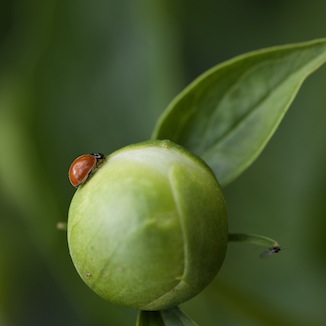
A winged, brightly coloured beetle insect which is a predator on aphids, and therefore helps the grower.
Overlapping yellow-orange fungal brackets develop on trunk or large limbs of host trees. Infected wood discolours going from yellowish to brown. Fungal sheets develop causing decay of wood.
Means "smooth" in Latin.
The flattened part of an organ, such as a leaf or petal. Also called a blade.
Can mean woolly and matted.
Means "woolly" in Latin.
Like a lance-head; narrowly pointed, widest near the base.
Woolly or cottony.
Patches of fluffy white wax appears of foliage, can cause leaf to yellow and develop soot moulds.
The largest orchid flower is that of Paphiopedilum sanderianum whose petals can grow up to 90 cm (3 feet) long. The blooms of the parasite Rafflesia arnoldi from the tropical jungles of S.E.Asia can measure up to 90cm across. The largest inflorescence belongs to Puya raimondii which produces a 2.4 metre diameter panicle which grows to a height of 10 metres; each panicle may bear up to 8,000 white blooms.
The Raffia Palm (Raffia farinfera) has leaf blades of up to 20 metres in length with petioles of up to 4 metres. The Bamboo Palm from the Amazonian region of South America also has leaves of about 20 metres.
A Lady Banksia rose bush (Rosa banksiae) in Tombstone, Arizona, USA covers an area of 740 square metres (about a fifth of an acre) and is supported by over 70 poles.
The Giant Fan Palm (Livistona callipyge) which is also known as the Double Coconut or Coco de Mer from the Seychelles, has a fruit with a single seed which may weigh 20 kg and take 10 years to develop.
A pest of Brassicas where the caterpillars eat the leaf blades leaving bare nerves.
The immature stage of an insect before it becomes a pupa and from there into the mature insect. Examples of larvae are caterpillars which usually eat plants and therefore they are often considered pests.
Fungal disease which affects leaves, stems and fruits. First small, green-grey patches appear which quickly spread; the sick tissue is dark and brown, with the surface wrinkled.
Can refer to buds which do not develop (unless stimulated in some way such as by pruning).
Borne on the side of an organ. For example a lateral branch.
White or yellow sap released by breaking a leaf. May refer to the milky sap extracted from rubber trees.
A name describing a plant which produces latex.
A species is named scientifically by using the genus name and the species name together to form a two part name such as "Primula vulgaris" (whereas the common name would be the Primrose). This is sometimes called the Latin name, since the names come from the Latin language or it may be called the binomial scientific name. In this way a plant or animal (or other organism) can be precisely identified whereas there may be several common names for the same organism. There is a botanical convention on nomenclature that the species name is in lower case and that the binomial name is printed in italics. [Read more}(/grower_tips/plant-names-explained)
Means "broad" in Latin.
Yellow-brown spots develop on stems, leaves and petioles and rapidly enlarge.
Plants wilt, discolours and diesback usually stem by stem. Black fungal bodies then develop on dead foliage.
An area of grass or other plants such as chamomile which is kept short for ornamental, recreational or practical use.
This is a mix of sand, fertilizer (ammonium sulphate) and a weedkiller chemical which can be spread on lawns, to kill unwanted broad-leaved weeds, and moss, whilst also improving the quality of the sward.
May be used to refer to branches which hang loosely.
Means "loose" in Latin.
A method of vegetative propagation by which a stem is induced to root by being covered in soil while still attached to the parent plant. The stem can be pegged down into the soil or a suitable soil mixture can be held around the stem (air-layering).
Refers to the removal of soluble substances from the soil as a result of the passage of water. Soils which are more porous such as sandy soils are generally leached more quickly.
The main stem of a tree that extends the system of branches.
A plant organ which contains chlorophyll, and therefore usually greenish in colour since other wavelengths of light are absorbed to enable photosynthesis, which is the primary function of the leaf. The leaves arise from the stems and are usually flat but of variable shape, may be lost each autumn (deciduous) or retained (evergreen).
Leaves discolour turning brown where eelworms internally eat leaves. Leaves later wilt and die. Buds are also attacked and growth may be stunted, if the terminal bud is affected, many lateral are formed. Stems may be scarred and any flowers produced may be deformed. Base of plant is affected first. Symptoms are most obvious in the autumn or in cool, damp summers.
A pest of raspberries which causes the leaves to become blotchy yellow on the upper surface but no reduction in vigour or cropping.
A fungal disease which affects lilies where the leaves become covered with brown blotches.
Stalks and fruits become covered in brown blotches with purple or yellow borders.
Yellow spots may appear on the leaves which enlarge and turn brown, the centre of the spots being lighter than the margins. Young fruits are also affected.
A fungal disease affecting peaches, nectarines, apricots and almonds where the leaves become thickened, severely distorted and reddish in colour.
A pest in some regions of plants such as roses where large pieces are cut from leaves to leave a scalloped effect.
A portion of a plant that is removed and used for vegetative propagation. Leaf cuttings are made by using a detached leaf or part of a leaf, and this may form adventitious roots and shoots when placed on a suitable growing medium with sufficient moisture. For example, begonia leaves may be used for this purpose.
An insect from the Hemiptera group which are sap-sucking and can be pests on rhododendrons, apples, potatoes and other plants. Evidence of white mottled/papery cast-off skins on leaves.
The individual part of a compound leaf which is usually leaf-like with a stalk of its own.
A pest of currants and gooseberries causing shoot tips to become distorted and withered; leaves damaged by sucking on the tops.
Pest affecting chrysanthemum, cineria, and holly where the leaves are tunnelled by small grubs.
Fungal disease of tomatoes where the leaves above go yellow, whilst below the purple mould is visible.
An organic compost material of partly decomposed leaves. This will break down into humus and is a good soil conditioner which will release its nutrients gradually.
Fungal disease where yellow spots appear on leaves, and a greyish mouldy covering on the underside.
Viral disease where the leaves are rolling upwards into a boat-like shape. The plants have a broom-like appearance, with leaves irregularly coloured, deformed, curled, necrotic spots on leaves, brown-black lines on leaves and petioles.
A disease which causes discoloured foliage with brown blotches.
Fungal disease affecting currants, dahlias, and iris causing browning blotches and spots to appear on the leaves; the leaves shrivel and drop.
The stalk of a leaf which bears the blade. Also known as the petiole.
Disease attacking the above-ground parts of plants giving numerous brown spots.
Irregular holes or notches are eaten in foliage of sorbus, birches, oaks and beeches in late spring. The lower branches are most severely affected. The adults do little harm but the larvae can cause severe damage to plant roots (especially those in containers).
Distorted masses of small shoots and leaves grow around stem bases. Bacteria is soil borne and enters host through wounds. Chrysanthemums are very prone, Heuchera, Pelargonium and Phlox are also susceptible.
This is the larva of the Daddy-long-legs (Tipuladae) and are about 4cm long and brown. They may be a pest of lawns and the roots of seedlings and some plants.
Foliage develop white-brown patches where caterpillars have been feeding. After feeding, the caterpillars emerge and pupate in silk cocoons on foliage.
Disease affecting leeks and occasionally onions causing the leaves to become spotted with orange specks.
A term that can describe a plant that is tall but whose stem is thin and weak, usually as a result of growing to try to reach sufficient light.
Refers to any member of the Leguminosae or pea family. In broader terms "legume" may refer to any plant which has nitrogen-fixing bacteria in root nodules.
In grasses, the glume or bract which bears the flower.
A raised dot on a twig. It is a small area filled with loosely packed cork cells, permitting the diffusion of gases in the stems (and occasionally in roots).
Caterpillars tunnel through trunks and branches of apples, sorbus, maples, birches, hawthorn, oaks and sycamores. The tips wilt and die and shoots wilt.
Means "charming" in Latin.
Yellow areas of discolouration develop on leaves. Whiteish fungal growth develop on lower leaf surface.
Grey growths develop on lettuce leaves. Internal tissues rot.
Plants tend to wilt and make slow growth. When dug up, white, powdery wax can be seen on the roots and soil particles.
Leaves show yellow mottling. Plants are stunted and the foliage may be distorted.
Smooth or "polished".
Land which is put down to grass for several years before being ploughed up and used for other crops.
A climbing woody vine such as Schefflera which in tropical forests can become very long.
This is a growing combination of fungus and algae which co-exist in a symbiotic relationship. There are many different forms and they can grow on rock and other surfaces. Lichens require very few nutrients since the algae photosynthesise and the fungi provide the support and additional nutrients from their saprophytic ability.
This may be described as the unique ability of organisms to grow and reproduce themselves, and includes all the wonderful and intricate aspects of these processes.
Refers to the way a plant (or other organism) performs its reproductive cycle. An annual completes germination, growth and seeding in one year, a biennial takes two years, and a perennial plant lives for longer. Perennials can be evergreen, deciduous, semi-evergreen or semi-deciduous.
Refers to the removal of plants from the soil.
This is essential for plants to carry out photosynthesis where they capture energy from the sun and combine it with nutrients, water and carbon dioxide gas to make sugars and other compounds. Different plants have differing light requirements since they have adaptations to various ecological niches in their places of origin. Too little light and etiolation may occur, whereas too much light can cause sun scorch.
Poor light causes poor growth of plants, unusually coloured or variegated foliage may revert to green.
Usually refers to soil with a low clay content and a high content of sand. The soil has larger pore spaces between the soil particles, and making it lighter to work. Sometimes this is called an open soil.
Young leaves scorched. Yellow or golden leaved shrubs are especially vulnerable to scorch in spring on dry soils.
Lignin is a major component of wood. Biochemically it is a complex organic polymer (chain of molecules), and together with cellulose it is deposited in the cell walls of xylem vessels, fibres, tracheids, and stone cells in woody and sclerenchymous tissue. The main purpose of lignin is to impart rigidity and strength to an otherwise flexible cell wall.
The swollen woody base of some shrubs which helps them survive drought and fire.
Means "strap shaped" in Latin.
A small projection at the junction of the blade of a leaf with its sheath, found commonly in the grasses.
Fungal disease causing black spots on the lilac leaves; shoots wither.
Shrivelled large brown areas develop where internal tissues have been eaten.
A pest of lilies and relations causing chewed foliage.
Dark green spots develop on foliage, leaves turn brown and die off.
Foliage develops yellow mottling. Plants are usually stunted. flower buds may not develop.
Compounds of calcium (such as calcium oxide); a chemical that may be used to neutralise acid soils. Hydrated lime is easy to handle and is most effective when fresh. It can be applied at 250-500g per square metre (0.5 to 1 lb per square yard) either as a top dressing or worked into the soil. Too much lime can make it impossible for some nutrients in the soil to be absorbed by plants.
A water-secreting gland or pore found in the leaves of many plants; sometimes called a hydrathode.
Refers to members of the Ericaceae family and other plants which generally dislike alkaline soils and need acidic soils with a pH reading below 6.5.
Loss of green colour, and possibly red or orange discolouration. Can affect a variety of plants
From late spring onwards, slim, tubular red or yellow-green projections develop on surfaces of lime trees.
Means "of muddy places" in Latin.
A contact insecticide (containing Gamma-HCH) used to control a wide range of insects.
Long, narrow and parallel-sided.
Means "narrow" in Latin.
Like a tongue.
Carl Linnaeus (1707-1778) devised the Latin name or binomial scientific naming system of plants which is in use today. A species is named by using the genus name and the species name together to form a two part name such as "Primula vulgaris" (whereas the common name would be the Primrose). [Read more](/grower_tips/plant-names-explained)
Latin name honouring C. Linnaeus.
One of two flap-like projections of a calyx or corolla. In orchids, the lowest of the three petal-like segments.
These are produced by plants as oils. In the storage tissue of oil-rich and fat-rich seeds such as those of the sunflower, the oil is held in "lipid bodies" which are microscopic oil droplets in the cell cytoplasm.
A soil which is shallow and prone to drought.
Refers to a plant which can grow on stony ground or rock, obtaining most water and nutrients from the atmosphere.
Means "of the shore" in Latin.
A measure of capacity (lit) equivalent to 1,000cc (cubic centimetre) or 1.76 pints.
The zone on the sea shore between the high and the low tide marks.
A type of bryophyte, related to mosses. (The shape of the 'thallus' resembles the lobes of the 'liver'.) Dark grey-brown or green plants grow on bare areas which are usually moist. These plants can take over bare patches of grass.
Means "lead grey" in Latin.
Fertile, well-structured soil which is a compound of clay, silt, sand and humus. It is mineral-rich and moisture-retentive yet free-draining.
Means "lobed" in Latin.
A part or segment of an organ deeply divided from the rest of the organ, but not separated.
Drawn out into blunt fingers or marked bulges.
Having lobes.
A small lobe.
A small cavity or chamber such as those found in some fruit.
Refers to a crop such as wheat which has been beaten flat by the wind or rainfall.
Long-day plants only grow, flower and seed if they receive more than 12 hours of light per day.
Means "long" in Latin.
Means "clear" in Latin.
Another name for quicklime.
Means "crescent-shaped" in Latin.
Aphids live on undersides of leaves and flower spikes which become sticky honeydew excreted by pests. Plants may die.
Means "Portuguese" in Latin.
Meaning "shiny".
Means "yellow" in Latin.